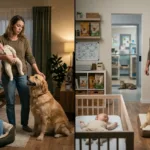
I’ll call my acquaintance Maya. That is not her real name, but her story about getting her children to feed the family dog is real enough to be useful.
Before the system worked, Maya’s mornings had a familiar pattern: the dog’s bowl was empty, both children insisted they thought the other one had handled it, and an adult quietly stepped in. By dinner, everyone was frustrated. The children felt nagged, the adults felt responsible for remembering everything, and the dog’s feeding routine depended on luck.
🐶 The important detail: Maya did not solve the problem by making her children solely responsible for the dog. She created a small, visible system that made participation predictable while keeping adults in charge of safety.
What They Had Already Tried—and Why It Failed
Maya’s family had tried many of the usual solutions. None was unreasonable. The problem was that each one depended on a child remembering a vague instruction in the middle of a busy routine.
- Verbal reminders: “Did someone feed the dog?” usually came after the family was already rushing.
- A note on the refrigerator: The note said “Feed the dog,” but did not say who, when, how much, or what counted as finished.
- Sticker rewards: The children liked the stickers for a few days, then stopped noticing them.
- Taking turns verbally: The children forgot whose turn it was, especially on weekends or school holidays.
- Natural consequences: Maya refused to let the dog go without food, so the consequence landed on the adults rather than the children.
The family eventually noticed that “feed the dog” was not one simple task. It involved checking the schedule, using the correct food, measuring the portion, placing the bowl safely, stepping away while the dog ate, and telling an adult that the task was ready to be checked.
Once they saw the full sequence, they stopped asking the children to remember a large responsibility and started teaching one repeatable routine.
The System That Finally Worked: An Overview
Maya created a small board beside the dog’s food container. It had three visible parts:
| Part of the board | Purpose | Example |
|---|---|---|
| Assigned | Shows who is responsible for the next feeding | Child A: breakfast; Child B: dinner |
| Checked | Shows that an adult confirmed the task | Initials or a check mark |
| Earned | Tracks consistent participation | One point for a complete, safe feeding |
The child did not receive a point merely for touching the scoop or moving a magnet. The point came after the entire sequence was completed and an adult had checked it.
The Specific Details That Made the Difference
- The board was placed next to the food, not in a hallway where everyone walked past it.
- Each child had a different colored magnet.
- The food scoop was labeled and always stayed in the same container.
- The chart showed breakfast and dinner separately.
- The adult check happened immediately, not at the end of the day.
- The weekly prize was chosen in advance, so nobody negotiated after every meal.
These details seem small, but they removed the arguments that had made the old system collapse. There was no need to ask “Who is doing it?” or “Did you use the right amount?” The board and the adult check answered both questions.
How It Worked in Practice, Week by Week
Week 1: Adjustments and Initial Resistance
The first week was not magically smooth. The children forgot to move their magnets, argued about whose turn came first, and occasionally marked a task before an adult had checked it.
Maya treated the first week as practice rather than proof of failure. She stood beside the children during the feeding routine and used the same short prompts every time:
- “Check the board.”
- “Use the labeled scoop.”
- “Step back while the dog eats.”
- “Now I’ll check it.”
- “Now you can mark the point.”
She also discovered that mornings were harder than evenings. On school days, she moved the breakfast preparation earlier and kept the adult check close to the kitchen routine. The system changed slightly; the safety rule did not.
Weeks 2–3: When It Started to “Stick”
During the second week, the children began checking the board before asking what needed to happen. They still needed reminders, but the reminders became shorter. Instead of explaining the entire task, Maya could point to the child’s colored magnet.
By the third week, the children began noticing the feeding routine as part of the day’s sequence: wake up, get dressed, check the board, prepare the food, and then move on to breakfast or homework.
That was the real improvement. The family was not relying on motivation at the exact moment the dog needed to be fed. The routine was attached to a visible cue and an existing part of the day.
Clear chore expectations, visual charts, consistent routines, realistic responsibility, supervision, and praise for effort can make a feeding system easier to follow. Maya’s system used all of those elements without becoming complicated.
The Exact System for Readers to Replicate
Materials Used
- One small magnetic whiteboard or laminated sheet
- Two child-specific magnets or clips
- One permanent marker
- One measuring scoop labeled with the approved portion
- A small container for points, tokens, or check marks
- A printed weekly reward menu
- A covered food container kept out of reach of very young children
Specific Rules
- One person is assigned to each meal. No shared assumption that “someone” will do it.
- The assigned child follows the same steps every time. No improvising portions or ingredients.
- An adult checks the feeding. The child does not earn a point before the check.
- The dog is not disturbed while eating. Children step away from the bowl.
- If the child forgets, the adult feeds the dog. The dog never waits while the family debates.
- Repeated difficulty means the task is adjusted. It does not automatically mean the child is careless.
- The system is reviewed weekly. New schedules, health needs, and changing abilities matter.
The feeding sequence was written exactly like this:
| Step | Child’s action | Adult’s role |
|---|---|---|
| 1 | Check the assigned meal | Confirm the correct child and time |
| 2 | Wash hands and use the labeled scoop | Check food and portion when needed |
| 3 | Place the bowl in the usual spot | Make sure the space is safe |
| 4 | Step away while the dog eats | Supervise the interaction and bowl area |
| 5 | Report that feeding is complete | Initial the chart and award the point |
The CDC recommends handwashing before and after handling pet food or treats and says adults should supervise children’s handwashing. In Maya’s house, that was part of the feeding task, not an optional extra.
The Final Prize—and Why It Worked
The children earned one point for each complete, checked feeding. At the end of the week, a shared target unlocked one family choice:
- Choosing the Friday movie
- Picking the weekend breakfast
- Selecting a family game
- Choosing the route for a weekend walk
- Staying up fifteen extra minutes on a weekend night
The reward worked for three reasons. It was immediate enough to understand, delayed enough to encourage consistency, and connected to family time rather than expensive objects. The children were working toward something they could enjoy together.
Maya also avoided taking away points already earned. A forgotten task meant no point for that meal; it did not erase the entire week. That kept one mistake from becoming a reason to give up.
Use a dedicated scoop, wash hands after handling pet food, clean feeding equipment, and keep food away from very young children. The reward system never replaced those adult-managed safety steps.
What They Would Do Differently Next Time
Maya said she would change several things if she started again:
- Start with fewer days. A three-day trial would have made the first week feel less overwhelming.
- Prepare the visual board first. She initially explained the system before the chart was ready.
- Use a larger portion label. The first label was too small to read quickly.
- Plan for weekends. The school-day routine did not automatically transfer to slow mornings.
- Define the adult backup in advance. Everyone should know who feeds the dog if the assigned child is sick or away.
- Explain the safety rules before introducing points. The animal’s comfort comes before the reward.
Why This System May Not Work for Everyone
A visual reward chart is a tool, not a universal answer. It may not be appropriate when:
- The child is too young to handle food safely, even with the planned level of supervision.
- The dog guards food, becomes tense around children, or needs to eat behind a barrier.
- The dog has a medical diet, medication schedule, or portion plan that requires adult control.
- The family schedule changes too often for a fixed rotation to be useful.
- Rewards create intense competition, anxiety, or arguments between siblings.
- Adults cannot reliably provide the check and backup meal.
In those situations, children can still participate by organizing supplies, filling a water bowl with an adult, putting toys away, or observing the routine. Participation does not have to mean handling the food bowl.
FAQ
What age can a child start helping feed a dog?
There is no single age that fits every child or dog. A young child may carry a pre-measured scoop with an adult, while an older child may handle more steps. Physical coordination, impulse control, the dog’s temperament, and the adult’s ability to supervise all matter.
Should children be allowed to choose how much food the dog gets?
No. Portion sizes, ingredients, treats, and meal timing should be determined by an adult and, when needed, a veterinarian. The child’s role is to follow the approved routine.
What if my child only does the chore for the reward?
That can be a normal starting point. Over time, talk about the dog’s needs and the family’s shared responsibility while keeping the reward modest. If the reward creates arguments, replace it with praise, a shared choice, or a simpler visual progress marker.
What if my child forgets?
Feed the dog safely first, then review the system. Move the chart, shorten the routine, add a reminder next to an existing habit, or return to side-by-side supervision. Do not make the dog wait while teaching the lesson.
Can two children feed the dog together?
They can help together if the roles are clear, such as one child carrying the scoop and another moving the magnet. Avoid having both children reach toward the bowl or compete for control around the dog.
Final Thoughts: Make the Next Step Obvious
Maya’s system worked because it was not really about a fancy chart. It was about removing ambiguity. The children knew whose turn it was, what the task involved, when an adult would check it, and what consistent participation could earn.
Clear assignment + visible steps + adult check + modest weekly reward + reliable backup.
If your children keep forgetting to feed the dog, try simplifying the routine before adding more reminders. The goal is not to transfer adult responsibility to a child. It is to give children a safe, repeatable way to contribute.
Would your family benefit more from a point system, a rotating chart, or a simple adult-checked checklist?
Sources and Further Reading
These trusted resources informed the guidance on age-appropriate chores, adult supervision, and safe pet-food handling:
- Centers for Disease Control and Prevention: About Pet Food Safety — explains handwashing, food handling, storage, cleaning, and supervision around pet food.

A father of three and a lifelong dog owner who started CentralUnify.com after years of figuring out — often the hard way — how to raise kids and pets who genuinely get along. Between school mornings, homework, and life with two very different dogs, Biscuit (an easygoing older lab) and Pepper (a younger terrier mix with a mind of her own), he’s learned a thing or two about keeping a busy household running without losing his sanity. When he’s not writing, he’s probably refereeing whose turn it is to feed the dogs.