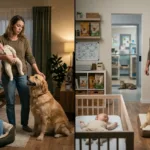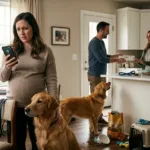
A children’s birthday party can fill a home with loud voices, fast movement, open doors, unfamiliar guests, decorations, food, and sudden changes in routine. Even a pet that usually enjoys family life may find the combination too intense.
Good pet safety during children’s birthday parties starts before the first guest arrives. The most important decision is whether the pet will participate at all. A separate room or complete isolation may be kinder and safer than expecting the animal to tolerate hours of noise and contact.
🐾 The central rule: A birthday party is optional for the pet. Adults should plan the animal’s location, protect exits and food, and supervise every interaction that does occur.
Decide in Advance Whether the Pet Will Be Separate
Do not wait until the house is full to decide what the pet will do. Consider the animal’s history with groups of children, sudden noise, doorbells, balloons, costumes, handling, and unfamiliar people. Also consider whether an adult can truly supervise while managing food, activities, gifts, and guests.
A pet may be able to observe a short, calm portion of the party and then spend the rest of the event behind a closed door or secure barrier. Other pets may be better off separated from the beginning. The decision should be based on the individual animal, not on a belief that the pet should be part of every family celebration.
| 🎈 Party situation | Safer plan | When to end contact |
|---|---|---|
| Small, calm gathering | Brief contact with close adult supervision | When the pet moves away or becomes tense |
| Many young children | Separate area from the start | Do not rely on children to follow rules independently |
| Loud music, cheering, or games | Keep the pet away from the activity | Isolate if noise cannot be reduced |
| Open doors and frequent arrivals | Secure the pet before guests enter | Keep the animal separated during arrivals and departures |
| Pet already fearful or unwell | Complete isolation with adult monitoring | Do not introduce the pet to the party |
Protect Doors, Gates, and Escape Routes
Birthday parties create repeated opportunities for a pet to slip through an open front door, gate, patio door, or garage. Before guests arrive, decide which doors must remain closed, which adult will monitor them, and where the pet will be during arrivals and departures.
- 🚪 Secure the pet before the first doorbell or guest arrival.
- 🔒 Use a closed door, reliable gate, or other barrier that children cannot open.
- 🧭 Keep the pet’s movement area free from blocked exits and crowded passages.
- 🪪 Check that identification information is current before the event.
- 👀 Assign one adult to check the boundary rather than assuming everyone is watching.
The AVMA guidance on parties and visitors notes that noise and excitement can upset pets and recommends a quiet indoor place away from the commotion. It also advises watching exits because pets may escape while guests enter or leave.
Keep Birthday Food Away From Pets
Birthday food can be especially difficult to control because children may carry plates, drop crumbs, share treats, or leave cups at floor level. Keep the pet away from the eating area unless an adult can supervise continuously and knows the food is safe.
Chocolate, coffee, caffeine, grapes, raisins, onions, garlic, alcohol, macadamia nuts, yeast dough, fatty foods, and products containing xylitol can be dangerous to pets. The ASPCA list of people foods to avoid feeding pets explains that risks vary by food, species, amount, and the animal’s health.
Use covered bins for plates, napkins, wrappers, skewers, balloons, and dropped food. Do not allow children to feed the pet from the birthday table or take food into the pet’s area. If the pet may have eaten something dangerous, call a veterinarian or poison-control service promptly instead of waiting for symptoms.
Give Guests a Short Set of Rules
Explain the boundaries before the party becomes noisy. Children do not need a long lecture, but they need to know whether the pet is available and what happens if the animal is separated.
- 🐾 Do not open the pet’s door or gate.
- 👐 Do not chase, hug, pick up, or crowd the animal.
- 🍰 Do not give the pet birthday food or drinks.
- 🚶 Do not follow the pet if it walks away.
- 📣 Ask an adult before approaching or touching the pet.
Tell parents or caregivers the plan as well. A guest may unintentionally open a barrier, invite children to see the pet, or offer a treat. One clear rule for all adults reduces conflicting instructions.
Supervise Children Who Want to Visit the Pet
If the pet is available for a brief greeting, an attentive adult must remain close enough to stop chasing, grabbing, crowding, or repeated touching. Supervision is not asking older children to watch younger children while the host prepares food or photographs the party.
Keep the contact optional. A child may observe from a distance, and the pet may choose to leave. If several children gather around, end the interaction before the animal loses a clear path away.
The Blue Cross guidance for dogs and visiting children recommends active supervision and separation whenever an adult cannot watch the child and dog together. Its advice is dog-specific, but the management principle applies broadly: a pet and children should not be left together without an attentive adult.
When the Party Requires Complete Isolation
Complete isolation is appropriate when the environment cannot be made predictable or when the pet cannot relax with children nearby. The goal is to remove the animal from the party’s demands, not to punish it for being uncomfortable.
- ⚠️ The pet hides, freezes, trembles, pants heavily, or repeatedly tries to leave.
- ⚠️ The pet becomes tense, vocalizes warnings, or reacts defensively when children approach.
- ⚠️ Children cannot reliably follow the rules or keep away from the barrier.
- ⚠️ Music, cheering, balloons, games, or door traffic cannot be reduced.
- ⚠️ No adult is available to supervise contact continuously.
- ⚠️ The pet is sick, injured, elderly, very young, or unusually sensitive to noise.
Once the pet is isolated, guests should not visit the room to “check on” or comfort the animal. A quiet area works only when the boundary is respected.
A Party-Day Safety Checklist
- ☐ Decide before the party whether the pet will participate or remain separate.
- ☐ Prepare a quiet, secure area away from music, games, and door traffic.
- ☐ Tell every adult where the pet is and whether the door or gate must stay closed.
- ☐ Keep cake, chocolate, candy, drinks, wrappers, and trash inaccessible.
- ☐ Assign an adult to supervise any approved pet contact.
- ☐ Monitor arrivals and departures so the pet cannot escape.
- ☐ Isolate the pet completely if noise, contact, or supervision becomes unsafe.
FAQ About Pet Safety During Children’s Birthday Parties
Should the pet be included in the birthday photos?
Only if the pet is comfortable, can leave freely, and an adult can control the interaction. Never hold, dress, crowd, or position the animal for a photo if it is trying to move away.
Can children visit the pet’s separate room?
Usually, no. If the animal has been separated, the room should remain private. Guests should not open the door, call through it, or gather outside to watch.
What if a child gives the pet cake or candy?
Remove the food safely, identify what and how much was eaten, and contact a veterinarian or poison-control service if the food may be dangerous. Do not wait for symptoms before seeking advice.
How do adults know it is time to isolate the pet?
Isolate the pet when it cannot relax, repeatedly attempts to leave, shows warning behavior, or when children and adults cannot maintain the agreed boundaries.
Final Thoughts: The Pet Does Not Need to Attend
A successful children’s birthday party does not require the pet to greet every guest or remain in the busiest room. Planning separation, securing exits, protecting food, and setting guest rules can prevent an enjoyable event from becoming frightening or dangerous.
When deciding on pet safety during children’s birthday parties, choose the arrangement that gives the animal the most control and the fewest demands. Complete isolation can be the safest form of participation.
Does your family keep pets separate during birthday parties, or have you found a calm way to include them? Share what has worked for you in the comments.
Sources and Further Reading
- American Veterinary Medical Association: Winter Holiday Pet Safety — guidance applicable to parties and visitors, including noise, quiet retreat areas, exits, food, and trash.
- American Veterinary Medical Association: Household Hazards — foods and household items that can harm pets and what to do after possible poisoning.
- ASPCA Poison Control: People Foods to Avoid Feeding Your Pets — chocolate, caffeine, xylitol, grapes, raisins, alcohol, yeast dough, and other food risks.
- Blue Cross: Keeping Your Family Dog and Visiting Children Safe — dog-specific guidance on supervision, separation, gates, and children’s contact with dogs.
A father of three and a lifelong dog owner who started CentralUnify.com after years of figuring out — often the hard way — how to raise kids and pets who genuinely get along. Between school mornings, homework, and life with two very different dogs, Biscuit (an easygoing older lab) and Pepper (a younger terrier mix with a mind of her own), he’s learned a thing or two about keeping a busy household running without losing his sanity. When he’s not writing, he’s probably refereeing whose turn it is to feed the dogs.